Featured
Table of Contents
Ask for recommendations from companies your size. A platform with advanced AI features is ineffective if nobody on your group has time to find out how to use them.
You've got your technique, your platform, your data (reasonably) tidy. Here's the develop series. Don't try to develop whatever at once. You'll construct nothing appropriately. Start with: Lead scoring model (foundation for whatever else)MQL alert to sales (the most crucial handoff)Standard nurture track for brand-new MQLs (3-5 e-mails, educational material)Re-engagement campaign for cold leads (quarterly at minimum)These four workflows drive the many pipeline impact for the least application effort.
Don't introduce automation to your entire database on day one. Choose one purchaser personality. Develop the workflows for that personality. Run it for 60-90 days. Step. Change. Expand. Piloting catches issues before they impact your whole database. It also offers sales an opportunity to see the method working on a small scale before you ask them to trust it totally.
Can Automated SEO Transform Your Visibility?
Whether anything beneficial happens next depends completely on whether sales comprehends what that alert in fact means. Inform them what to do when they turn down a lead. Develop feedback loops so marketing learns from those rejections.
Refresh it every quarter. Sales turnover is genuine and new reps will not magically understand your scoring design. Designate someone who owns the automation strategy. Not collectively owned between marketing and sales. One person responsible. Set SLAs for lead action times. If marketing sends out a sales-ready lead and sales takes 5 days to follow up, the lead is cold.
Automation that isn't reviewed becomes the automation graveyard we talked about earlier. Workflow reasoning, scoring guidelines, segment meanings, content mapping. When the individual who constructed it leaves, you need to be able to comprehend what they constructed and why.
Scaling Modern Sales Ecosystem in 2026
The automation fires completely. The content goes nowhere. Your content has to match the buying stage and the personality.
Get this wrong and your automation is just sending out irrelevant e-mails on schedule. Here's what each phase really requires: Educational content that addresses the issue, not the service.
Consumer testimonials with specific outcomes. ROI calculators. Comprehensive item documentation. Referrals. Before you build automation series, audit what content you really have for each stage and each personality. You'll probably find you have great deals of awareness material, some consideration content, and really little decision-stage material. Build to fill the spaces.
Store authorized material in a centralised library. Usage consistent naming conventions. Make it easy for anybody building workflows to find what they need. Sounds administrative. Conserves enormous quantities of time. Before you launch, verify: Sales and marketing have concurred on MQL and SQL definitionsLead lifecycle stages are documentedBuyer personas are built from genuine consumer researchBuyer journey is mapped with content designated to each stageCRM and marketing platform are syncing in real-timeDuplicate records have actually been cleanedConsent records exist for all contacts being marketed toBehavioural and firmographic information are unifiedLead scoring design is constructed and validated against historic dataScore decay is configuredMQL alert workflow is active and testedBasic nurture tracks exist for each personaRe-engagement project is set up for cold leadsPost-sale onboarding automation is in placeRevenue attribution model is configuredKPI control panels are developed (MQL to SQL rate, pipeline affected, CAC by channel)90-day evaluation is scheduledOne individual owns the automation strategySales SLA for lead response time is agreed and documentedQuarterly evaluation cadence remains in the calendarAll workflows are documentedIf more than five of these are missing, you're not all set to introduce.
Mastering Automation to Accelerate B2B Operations
B2B marketing automation works. Business that implement it effectively produce more certified pipeline, waste less sales time on poor-fit leads, and build much better relationships with potential customers over long purchasing cycles. Getting there takes more than buying a platform and activating templates. You require a real strategy, tidy data, teams that actually agree on meanings, content worth sending out, and someone who owns the entire thing.
Lead scoring, MQL meaning, sales positioning, standard support. They construct a competitive benefit that's really hard to replicate. The method, the content, the clean information, and the team that in fact utilizes all of it together?
In the hectic digital world, running a business without automation is like trying to paddle a boat against the current. When it pertains to B2B companies, the story isn't any various. Marketing jobs are progressively intricate, and the need for B2B marketing automation is more critical than ever. Let's break down what B2B marketing automation is, why it's essential, and how it can transform your service operations.
Scaling Your Sales Funnel in 2026
This can significantly enhance functional effectiveness and grow earnings much faster. This procedure helps marketing automate recurring jobs like email campaigns, social networks publishing, and even advertising campaign. As an outcome, it frees up your marketing group to concentrate on more tactical, top-level tasks.: This tool masters list building and enables services to develop and automate detailed, customized workflows.
: A Salesforce product, Pardot offers a B2B marketing automation tool outstanding in lead management and ROI reporting.: Offering a robust marketing automation platform with an easy to use user interface, Act-On is great for little and medium businesses.: Integrating email marketing, marketing automation, sales automation, and CRM categories, ActiveCampaign supplies small companies a platform for managing and growing their consumer base.
: As an email marketing automation tool, Sendinblue allows services to build and grow relationships with their customers.: Supplying a completely incorporated cloud-based platform, SharpSpring permits services to track customer behavior, drive more leads, and convert them to sales.: A visual marketing software application, Autopilot enables users to create customizable marketing workflows and automate their email, advertising, and sales processes.
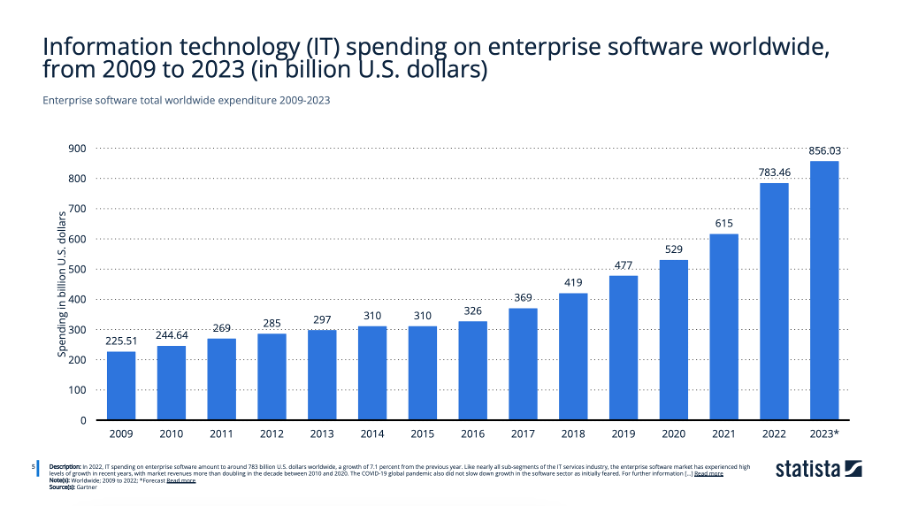
Why do we require marketing automation in the B2B landscape? There's a simple answer: B2B business are handling longer sales cycles, bigger decision-making systems, and a need for more individualized communication. B2B marketing automation helps to manage these complexities effectively. B2B marketing automation plays a significant role in developing tailored customer journeys.
How Advanced AI Drives Enterprise Growth
By using a B2B marketing automation platform, you can begin an automatic email or a series of drip projects. This procedure, understood as lead nurturing, helps keep your potential customers engaged by providing them with pertinent info at each step of their journey. A research study by Forrester Research study discovered that business standing out at lead nurturing generate 50% more sales-ready leads at 33% lower cost.

Latest Posts
Building Dynamic Digital Architectures Via API-First Tools
Scaling Digital App Solutions for 2026
Why Mobile Discovery Is Essential for Local Growth